


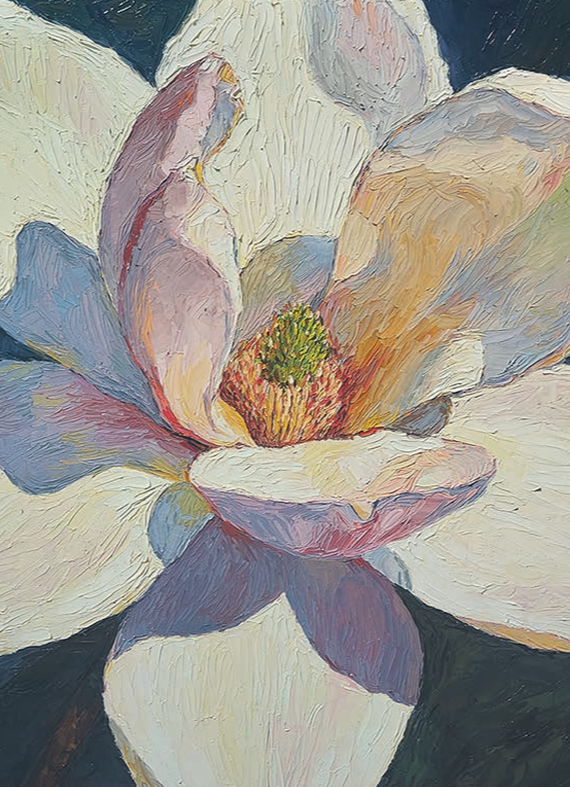
From a distance, it is simply a magnolia blossom, a meter of creamy white petals opening across the canvas, built up thick with a palette knife. Step closer and something else emerges: a shape, deliberate, half-buried in the strokes of the painting. It is a word, written in ancient Hebrew, and once you see it, you cannot unsee it.
This is the quiet signature of Evgeny Maximov, 50, a Russian-born painter who makes his home in the countryside near the palace town of Mafra, 40 kilometres northwest of Lisbon. Maximov and his wife arrived in Portugal in 2007, drawn, like many, by the light, the landscape, and the relaxed rhythm of life. This is where he paints, in a sunny house surrounded by fields and flowers, within reach of the shores of the Atlantic.
In his first three years as a painter, Maximov sold close to eighty works. Then “life happened,” as the saying goes. Putting aside his paints, he took a job in tech support, then helped his wife run a family business. He was able to do all that was needed, except one thing: he could not stop wanting to paint.
Full bloom
Today, he has returned to his love full-time.
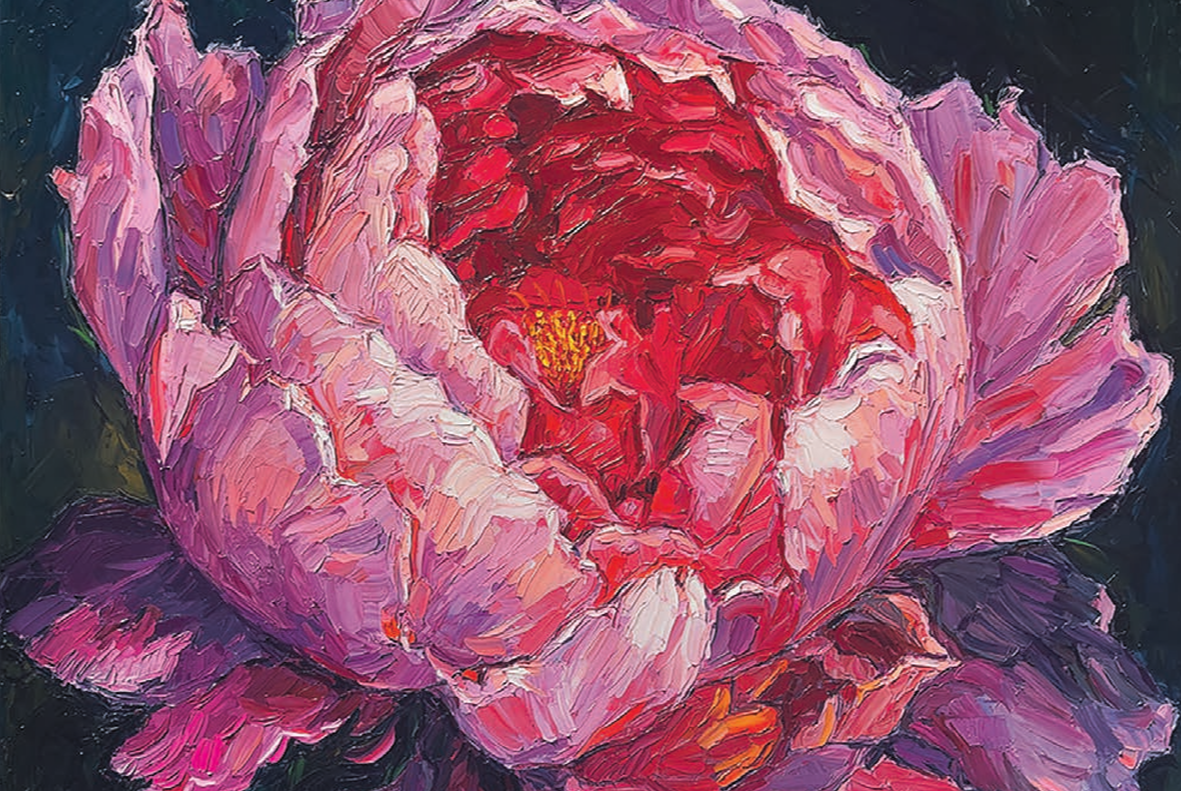
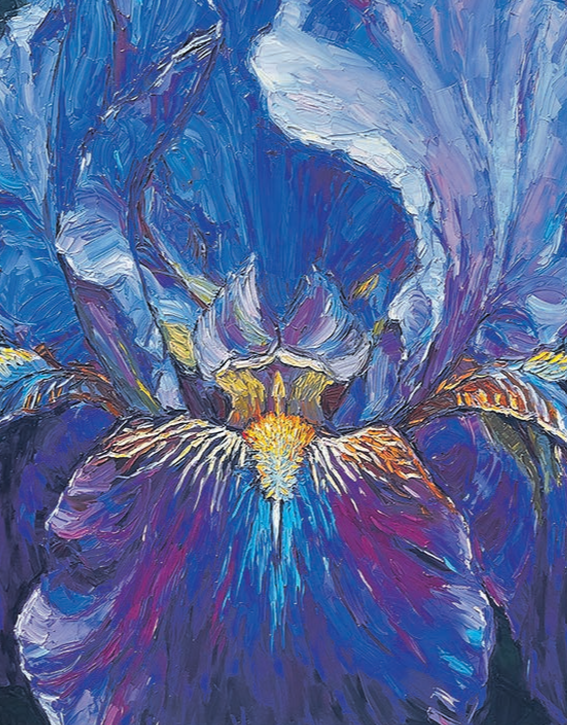
That work has crystallised into a series the artist calls “Ancient Song,” ten large floral paintings, each built around one ancient Hebrew word for worship, with each word concealed within the design of the flower. The white magnolia, painted open and exposed, carries the word Yadah—praise with the hands lifted and held open, nothing protected. No flower, he says, looks more like that posture than a magnolia in full bloom. Nestled in a peony is Tehillah—praise that rises into song. An iris secretly bears Halal, meaning to shine, to celebrate with abandon.
Concealment is the hallmark of these elegant works of art. The word is not a label or banner across the front of the canvas but something woven into the paint, so that the person who lives with the painting comes to know it is there, while a visitor may simply see a beautiful flower. It turns a decorative object into something quieter and more personal, a piece of art that keeps speaking long after the room has gone still.
A documented series
Maximov’s faith undergirds this work. He and his wife serve as elders and worship leaders at Riverside International Church in Cascais. The Hebrew words are not decoration borrowed for effect; they are the vocabulary of a life. But the paintings are not sermons. They are flowers, made for homes where beauty and belief share the same wall.
The pieces are large—about a meter square. Painted entirely by hand in oil, they are shipped worldwide from Portugal. Maximov documents the series as it grows, one painting at a time, for a small but widening audience following each new word as it emerges from the paint.
In a sense, it is a very Portuguese story: a couple who came from far away, fell in love with the country, and are now building something of their own where they have made their home. That something happens to be beauty with a secret etched inside it makes it all the more fitting.
Evgeny Maximov’s work can be found at https://maximovart.com/ and on Instagram at @maximovartist.








 English
 Nederlands
 Deutsch
 Français
 Español
 Italiano
 Svenska
 Pусский
 中文
中文 Türkçe
 Português
 Polski
 عربي
عربي Suomi
Suomi עִברִית
 Português (Brasil)
Follow us on social media