


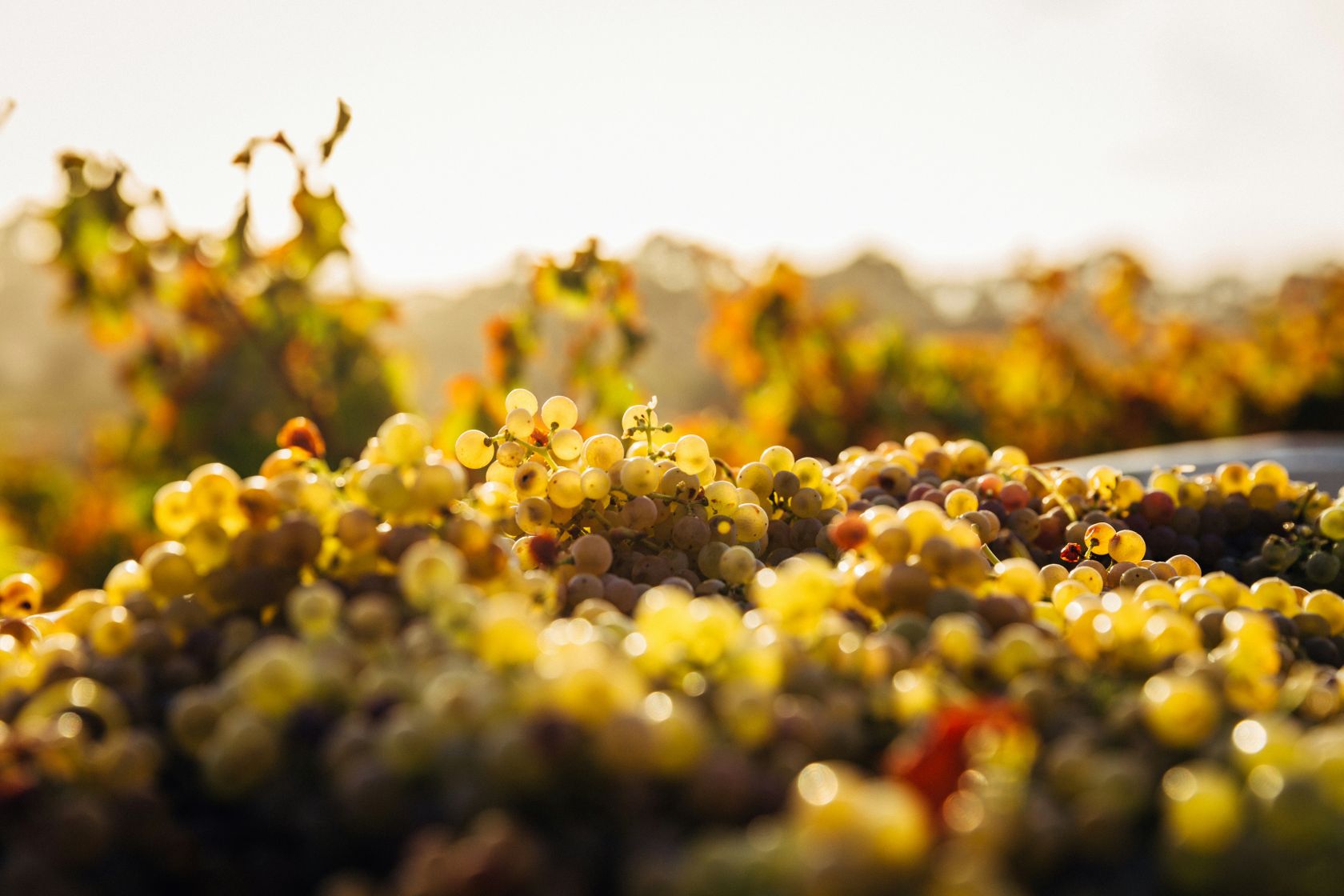
The production forecast for the 2026 harvest in the Douro Demarcated Region was presented by the Association for the Development of Douro Viticulture (ADVID), based in Vila Real.
Uncertain outlook
The general director of ADVID, Luís Marcos, said that the harvest outlook this year is "a little uncertain" and explained that the forecasts are based on the pollen method collected during the flowering phase of the vines in the three sub-regions of the Douro - Baixo Corgo, Cima Corgo and Douro Superior - and, therefore, do not take into account post-floral factors that impact production.
Therefore, on Monday, ADVID also held an interim review with its members to "understand the impact of what happens after flowering."
Production range
"Given that the production forecast range varies between 243,000 and 272,000 pipes, we predict that production may be close to the lower limit, and may even be lower than this production limit," concluded the official.
Declared production
The declared production in the Douro in 2025 was 178,000 pipes. In the last 25 years, this was the second-lowest production in the region.
"We will be aiming for growth of 25% to 30% compared to the previous year," said Luís Marcos.
In the Douro, the expression "until the baskets are washed, it's harvest time" seems to be increasingly relevant, because the final harvest will be highly dependent on the weather conditions that prevail until the grapes are cut.
“We are talking about a year that had conditions that bring us some unpredictability regarding the impact on production,” said the general director of ADVID.
Uncertain climate
The winter was extremely rainy; the spring was hot with record-low rainfall. In May, there were 12 days of a heat wave, and in June, there were also 10 days of a heat wave.
“The vines were in water comfort until the end of June; at this moment, we notice that they are already in a phase with mild water stress and that, with the aggravation or maintenance of these heat conditions, it can impact the final production,” he said.
Very high temperatures can compromise the development of the berry and, as he pointed out, last week there were already “some episodes of scalding” of the grapes.
There were also situations, more localised, of hail, and there was an anticipation of 10 to 12 days of the vegetative cycle of the vine, which can lead to a “slight anticipation of the harvest”.
However, Luís Marcos stressed that "ripening conditions are also very dependent on the climate," so "very high temperatures can slow down the ripening process" and "prevent the harvest from happening."
Vine health
This was not a year of much downy mildew pressure, the main disease that is felt at the beginning of the vegetative cycle and that has a very large impact on production, but vigilance on the part of producers will be necessary for situations of powdery mildew and the green leafhopper.
The green leafhopper is, according to Luís Marcos, "a pest that has been gaining a lot of expression in the region, mainly in the final phase of the cycle and that can have some impact on the vegetative development of the vine and consequently on its qualitative potential."
Harvest forecasts are parameters that help companies to develop business strategies and are evaluated by the interprofessional council of the Douro and Porto Wines Institute (IVDP) to define the benefit, that is, the amount of must that each producer can transform into Port wine.
In the Douro region, the yield fell from 104,000 pipes (550 litres each) in 2023 to 90,000 in 2024 and 75,000 in 2025, a drop of 29,000 pipes in three years.






 Portugal Handbook
 English
 Nederlands
 Deutsch
 Français
 Español
 Italiano
 Svenska
 Pусский
 中文
中文 Türkçe
 Português
 Polski
 عربي
عربي Suomi
Suomi עִברִית
 Português (Brasil)
Follow us on social media