

“At the moment, the calculations are still being made by the National Laboratory of Civil Engineering; they are not finalised, therefore, the work has not yet started, but we foresee that it can begin in January and February,” said the Mayor of Lisbon.
Carlos Moedas was speaking to journalists after the ceremony that marked the start of the excavation work on the ground, by the H2O tunnel boring machine, of the second tunnel of the PGDL, which will connect Beato to Chelas, over a distance of one kilometre.
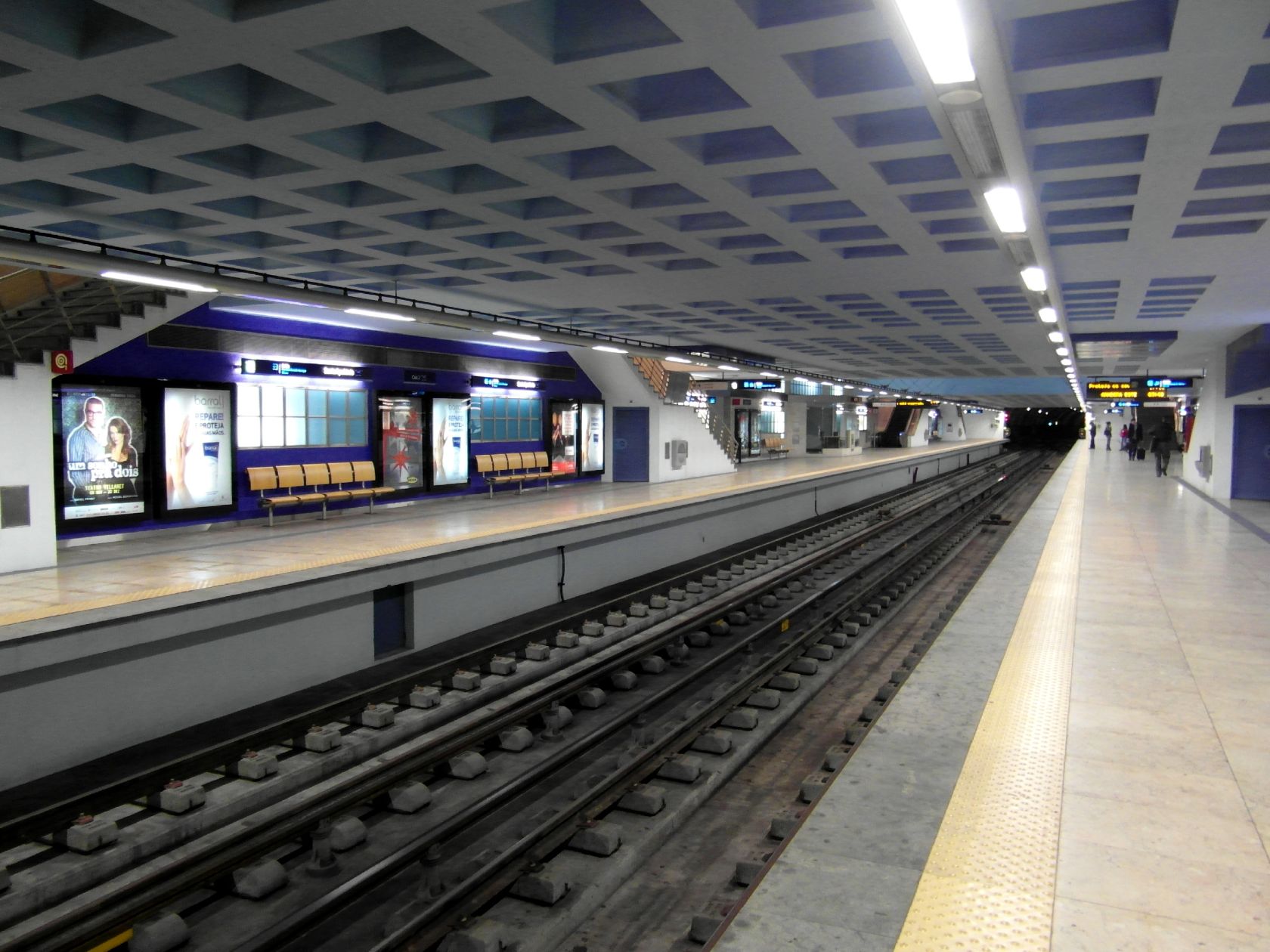
The mayor emphasised the importance of the project, asking for the understanding of Lisbon residents regarding the fact that the Lisbon Metro will be inoperative for approximately six months between the Terreiro do Paço and Santa Apolónia stations.
“Currently, the necessary work is being carried out with great care by LNEC (National Laboratory for Civil Engineering). It's a very delicate project because the tunnel passes close to the metro tunnel. Obviously, during this work, the Santa Apolónia station up to Terreiro do Paço will be closed,” he explained.
The Social Democrat added that all mobility alternatives will be provided through public transport, such as Carris (Lisbon's public transport company), “so that people can move around.”
“Now, we cannot put anyone in danger. We cannot, during such a delicate project, have the metro operating. That would be impossible and, therefore, yes, the metro will be closed when the work begins,” he reiterated.
Despite the proximity of the CP – Comboios de Portugal train station in Santa Apolónia, train service will continue to operate, according to Carlos Moedas.
The first tunnel of the PGDL (Lisbon Water Management Plan), which connects Campolide to Santa Apolónia, began construction in December 2023 and was completed on July 22 of this year. Previously, even with delays, the second tunnel was expected to be completed by the end of 2026.
The initial PGDL schedule estimated the end of its full implementation in February 2025.
With a total investment of approximately 250 million euros, the PGDL – first announced in 2006, but only progressing in 2015, with Fernando Medina (PS) as mayor – is considered an important project to address floods and inundations in the capital, but the major interventions, namely the construction of tunnels, only began in 2023 under the presidency of Carlos Moedas (PSD). The project has a planned investment of R$79 million for 2025.
The two tunnels will collect water from two high points (Monsanto and Chelas), as well as from additional collection points along their route – namely, Avenida da Liberdade, Rua de Santa Marta and Avenida Almirante Reis – conducting the water volume to the receiving body, the Tagus River (in Santa Apolónia and Beato), according to information on the PGDL website.






 English
 Nederlands
 Deutsch
 Français
 Español
 Italiano
 Svenska
 Pусский
 中文
中文 Türkçe
 Português
 Polski
 عربي
عربي Suomi
Suomi עִברִית
 Português (Brasil)