


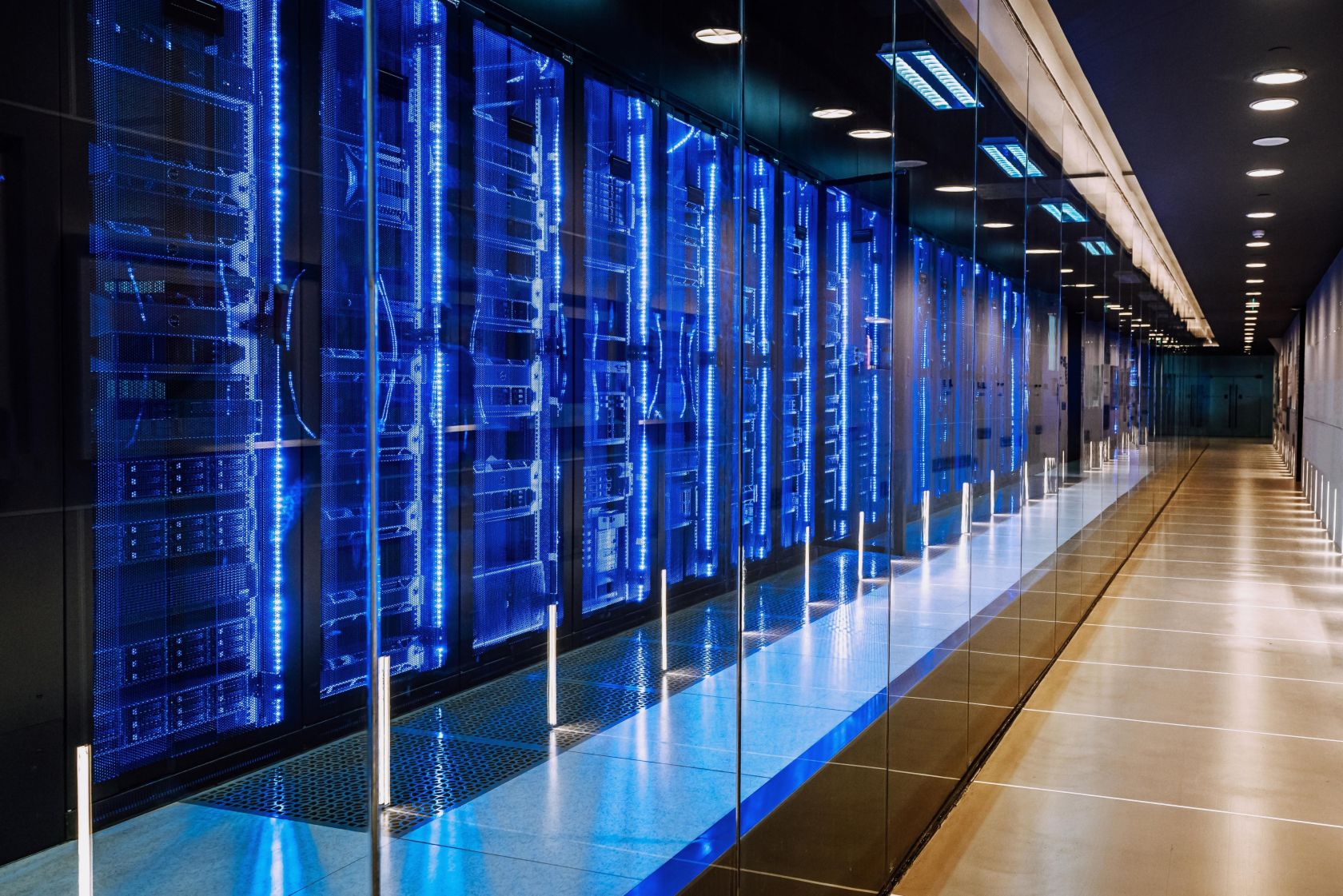
Today, the equation has changed. Artificial intelligence, cloud computing and the exponential growth in the volume of data have made energy the main decision criterion. It is no longer enough to have space to build. It is necessary to ensure reliable, competitive, scalable and available electricity at the time when the investment wants to move forward.
CBRE's Global Data Center Trends 2026 study makes this reality very clear. Installed capacity continues to grow in several regions of the world, but demand is increasing even faster. In Europe, inventory from the four largest markets, London, Frankfurt, Paris and Amsterdam, grew by 19% in the first quarter. Still, operators continue to look for new locations capable of providing power and expansion capacity. According to CBRE, the best-positioned European markets will be those that can offer electricity at competitive prices, at scale and with real conditions to build.
Portugal seems to bring together almost all the necessary arguments. We have growing renewable production, a privileged Atlantic position, submarine cables, stability, land and large-scale projects already announced, especially in Sines. We also have a rare opportunity to connect clean energy, digital infrastructure and international investment in a new economic platform. But there is a decisive difference between producing energy and being able to deliver it.
A data centre doesn't choose a country just because it produces a lot of renewable electricity throughout the year. You need a grid connection with guaranteed capacity, redundancy, stability, and predictable timelines. You need to know when you can start trading. And it is precisely here that Portugal faces one of its biggest risks.
We have blocked renewable projects, limitations on grid capacity, lengthy permitting processes and investments that depend on decisions made by multiple entities. At the same time, we advertise large data centres as if it were enough to identify a plot of land and ensure an intention to invest. It is not enough. Energy for the digital economy has to be planned before demand arrives.
It is necessary to strengthen transport and distribution networks, accelerate battery storage, create production solutions close to consumption and articulate large digital projects with renewable parks, logistics and industrial capacity. We must also ensure that the growth of data centres does not compete in a disorganised way with the needs of the populations and companies already installed.
The discussion cannot be reduced to the idea that these assets consume too much energy. They consume, without a doubt. But they can also help justify new investments in grids, storage, and renewable production. They can create stable demand, attract technology companies and strengthen Portugal's position in the artificial intelligence economy. To do so, however, they need to be integrated into an energy and territorial strategy, not treated as isolated projects.
The CBRE study also shows that operators start looking for alternatives to large traditional markets when they no longer offer sufficient capacity. This is where Portugal can benefit. But that window of opportunity will not remain open indefinitely. Other countries are also investing in energy, networks and digital infrastructure.
Portugal has the conditions to assert itself as one of the main European data centre hubs. The problem is no longer to convince the world of our advantages. The problem is to ensure that, when investors arrive, there is the capacity to connect them. Because the future of Portuguese data centres will not be decided by the number of projects announced. It will be decided by the amount of energy we can deliver, safely and within the promised timeframe.








 Portugal Handbook
 English
 Nederlands
 Deutsch
 Français
 Español
 Italiano
 Svenska
 Pусский
 中文
中文 Türkçe
 Português
 Czech
Czech Hungarian
 Polski
 عربي
عربي Suomi
Suomi עִברִית
 Português (Brasil)
Follow us on social media