


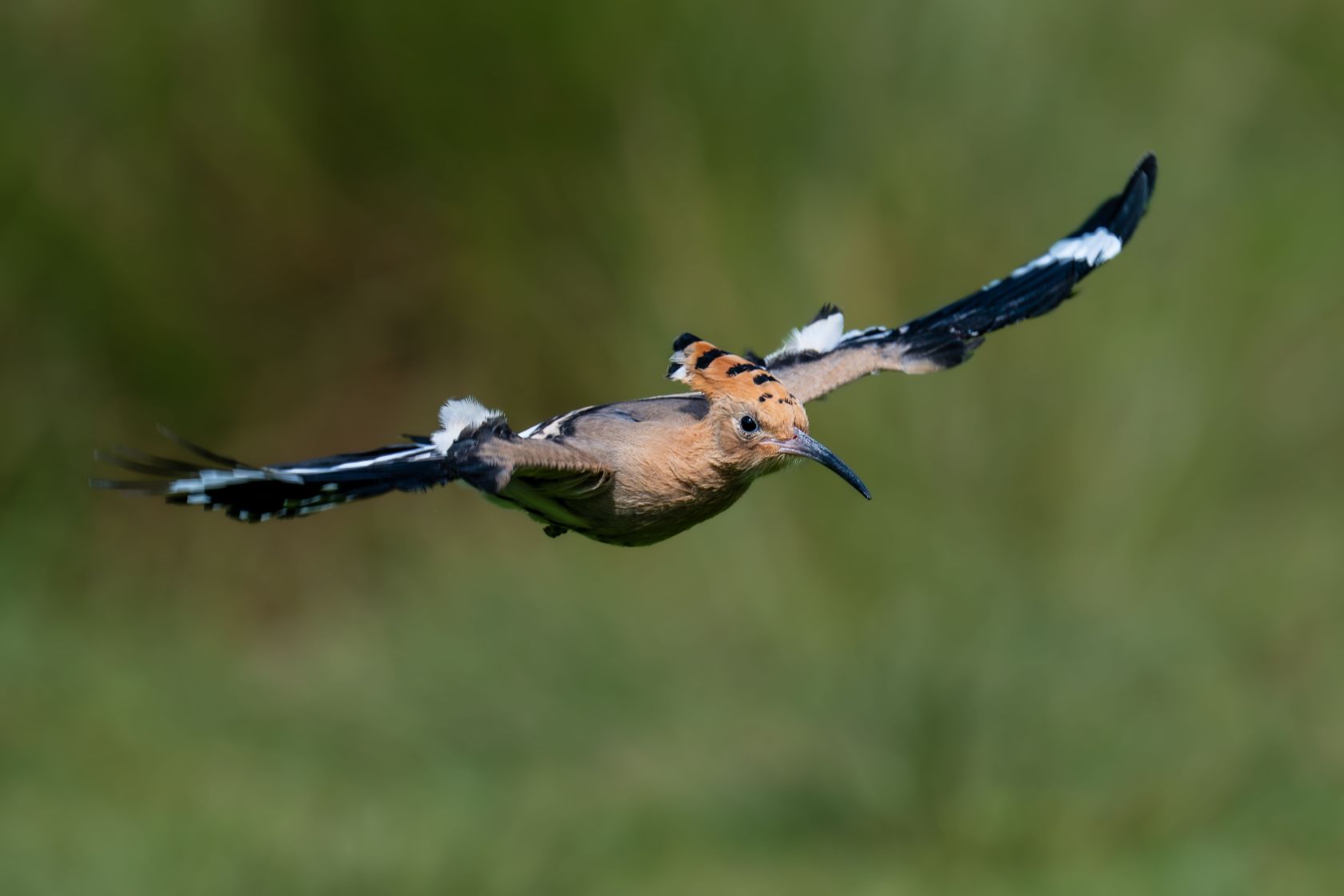
Have you heard something unusual in the woods? A ‘hoop, hoop, hoop’ noise? Or seen this unmistakable, exotic-looking bird, with pinky-brown feathers, striking black-and-white striped wings, a long bill, and a large, black-tipped crest?
This is the Hoopoe bird, scientifically known as Upupa epops, an attractive bird against the green foliage of Portugal’s trees and grassy areas. When it ‘hoops’, its long, downcurved beak dips, and they raise their striking crest that becomes a spectacular crown when the bird is excited, alarmed, or landing. While the ‘hooping’ you hear is primarily to attract mates and defend their territory, they also make raspy croaks when alarmed, mechanical rattles, and hisses.
Resident
They are commonly found in the milder regions of southern Iberia and are considered a resident species, found poking their beaks into lawns, vineyards, and golf courses for insects all year. Some are migratory, taking off from the colder parts of Continental Europe, passing through on their way to Africa.
The largest population in Portugal is south of the Tagus, but they are common throughout Iberia and most of Europe, Asia and Africa. They are a truly impressive spectacle - their distinctive crest of feathers, which resembles a large mohawk, is by far their most eye-catching feature, which serves as a visual display and communication tool in the wild. Highly territorial, they are solitary birds that usually travel and forage alone, but sometimes in pairs. You may occasionally see small family groups, but they don’t flock together as other bird species might do. Living on ants, grasshoppers, beetles, crickets, and other insects, they will include seeds, fruits, and even small lizards and frogs, which they will beat against a surface to kill them, then cleverly remove the indigestible parts before eating them.
Healthy population
The hoopoe is a ground-forager, small to medium in size, measuring between 25cm and 30cm long and weighing up to 85g. Males and females look alike, females are slightly smaller, and both have the famous crest on their heads – a reddish-orange colour with white patches and black tips. This crest has an important role in signalling the bird’s mood to others – when the bird is calm, its feathers lie flat, but when excited or agitated, its feathers can be raised to make it appear larger than it is.
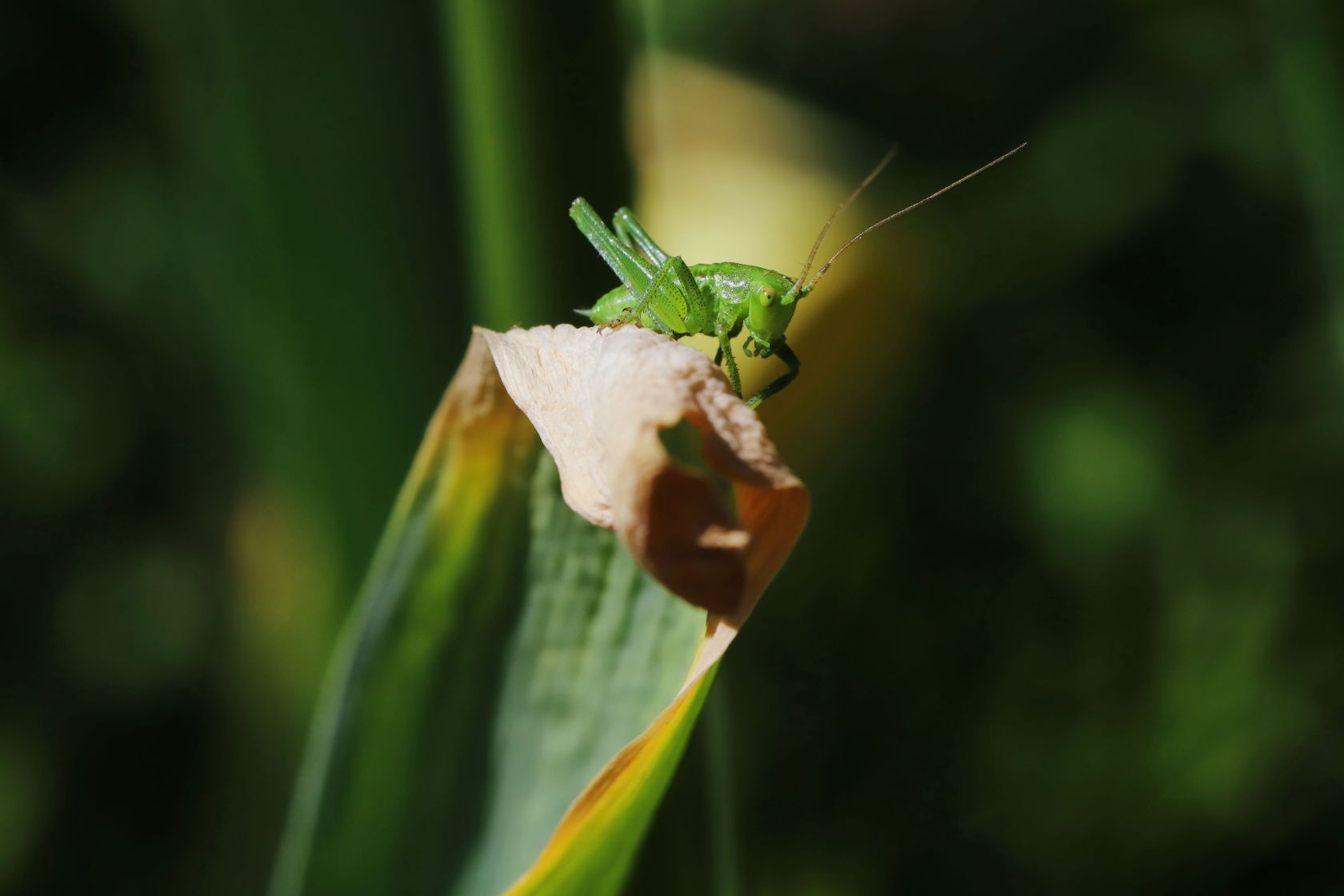
They have quite a healthy population, so they are not currently endangered. They forage along the ground and dig up food from the soil, and strong muscles around their beaks allow them to open their mouths when probing for food - constantly overturning every little rock or leaf in search of small morsels of food. Hoopoes are also particularly enthusiastic foragers of animal droppings and dung heaps, searching for beetles. More rarely, they will feed in the air in pursuit of flying insects, where their strong and rounded wings make them fast and manoeuvrable.
Sunbathers!
They appear to sunbathe by spreading out their wings and tails low against the ground and tilting their heads up while preening. But this is not sunbathing as we know it - they do it to manage parasites, regulate body temperature, and distribute natural oils. By spreading their wings flat against the ground and tilting their heads, they cleverly use the sun’s heat and UV rays to kill lice and harmful bacteria on their plumage, making it a critical part of their grooming routine.
They are famous for having a foul odour, too, and are nicknamed ‘stink birds’, as during the breeding season, brooding females and their chicks squirt a thick, brown liquid from a gland above their tails that smells like rotting meat to deter predators.
During flight, they flap their wings in a seemingly erratic motion, more like that of a butterfly, which helps the bird confuse aerial predators, save energy during short flights, and manoeuvre quickly.
The hoopoe appears in the folklore of many cultures throughout human history - being mentioned in various religious books, Egyptian hieroglyphics, Greek plays, and Chinese texts- and is renowned as an ancient messenger - famously appearing in the Quran as the confidant of King Solomon and the Queen of Sheba.








 Portugal Handbook
 English
 Nederlands
 Deutsch
 Français
 Español
 Italiano
 Svenska
 Pусский
 中文
中文 Türkçe
 Português
 Czech
Czech Hungarian
 Polski
 عربي
عربي Suomi
Suomi עִברִית
 Português (Brasil)
Follow us on social media