


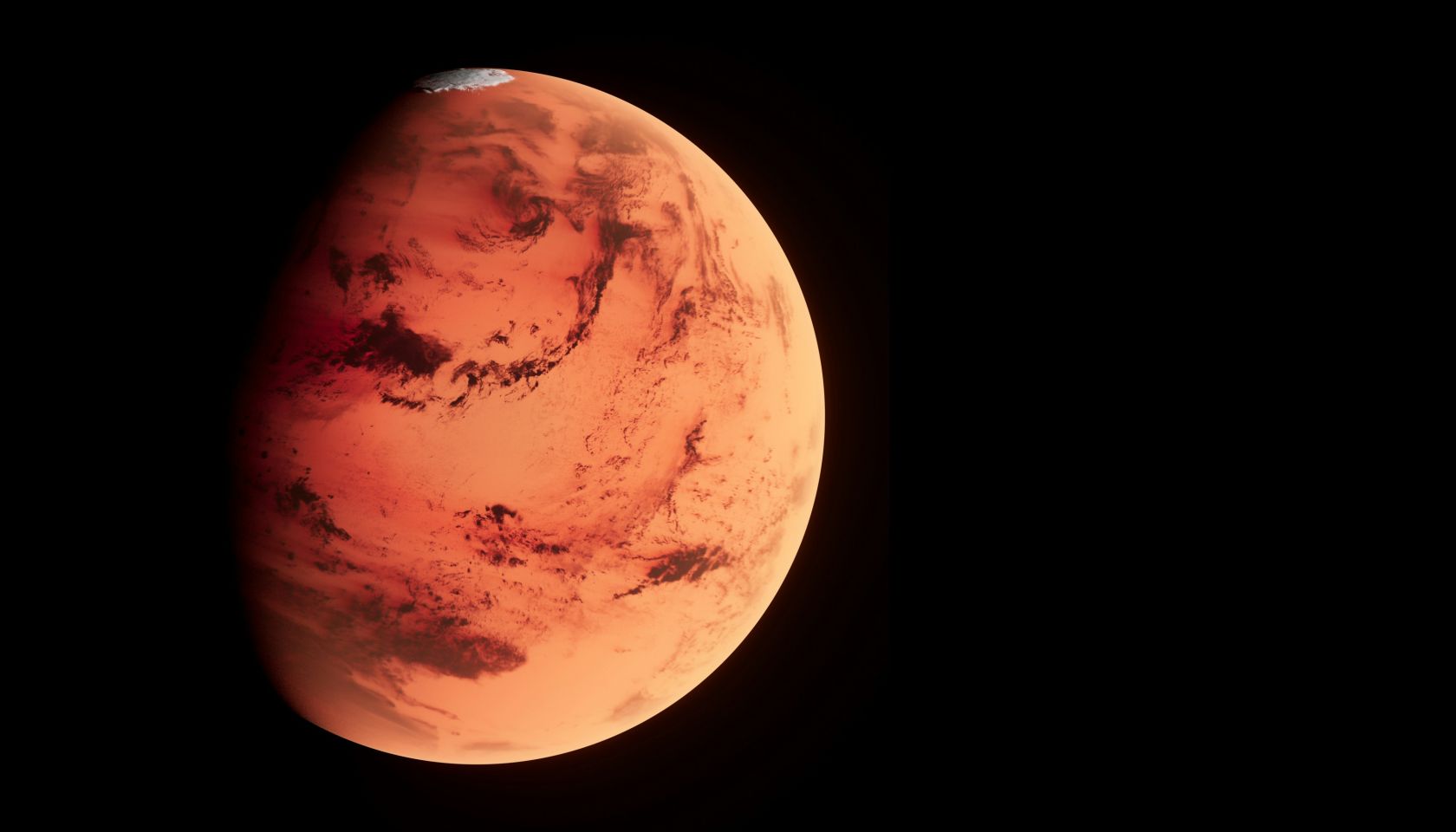
Rare and difficult to "capture," Martian clouds enable detection of atmospheric waves, which are essential for understanding how energy is transported through the atmosphere, as stated by the UL Faculty of Sciences, where part of this unprecedented work was carried out.
"When humanity reaches Mars, we will have a better understanding of how the atmosphere is distributed across its various layers, which will enable a smoother landing on the planet," said Francisco Brasil, the study's lead author, as quoted in the statement.
The measurements of cloud altitude and speed on Mars were derived from images captured by the European Mars Express probe, which has been orbiting the planet for 23 years.
"This is the first time we have been able to simultaneously measure the altitude and speed of atmospheric waves on Mars using images from a single camera," noted Francisco Brasil.
The study, considered the first of its kind, was recently published in the specialised journal *Journal of Geophysical Research: Planets*.
In addition to Portuguese researchers from the UL Faculty of Sciences and the Institute of Astrophysics and Space Sciences, the project involved scientists directly associated with the European Space Agency's (ESA) Mars Express mission.
In the race for space exploration, China and the United States aim to send crewed missions to Mars in the 2030s.








 English
 Nederlands
 Deutsch
 Français
 Español
 Italiano
 Svenska
 Pусский
 中文
中文 Türkçe
 Português
 Polski
 عربي
عربي Suomi
Suomi עִברִית
 Português (Brasil)
Follow us on social media