



AGI — Artificial General Intelligence

Artificial General Intelligence, or AGI, is the idea of an AI system with broad, flexible intelligence similar to or beyond human intelligence. Today’s AI systems can be extremely powerful in specific tasks, such as writing, coding, translation, image generation and pattern recognition. But they are not generally intelligent in the full human sense. AGI remains a debated and future-facing concept. Some experts believe it may arrive soon; others think it is much further away or poorly defined.
AI — Artificial Intelligence

Artificial Intelligence is the broad field of building machines or software that can perform tasks normally associated with human intelligence. These tasks may include recognising speech, understanding language, making predictions, identifying images, recommending products, playing games, writing text or helping with decisions. AI does not mean a machine is conscious or human-like. In most practical cases, AI means software that uses data and algorithms to produce useful outputs.
AI Alignment
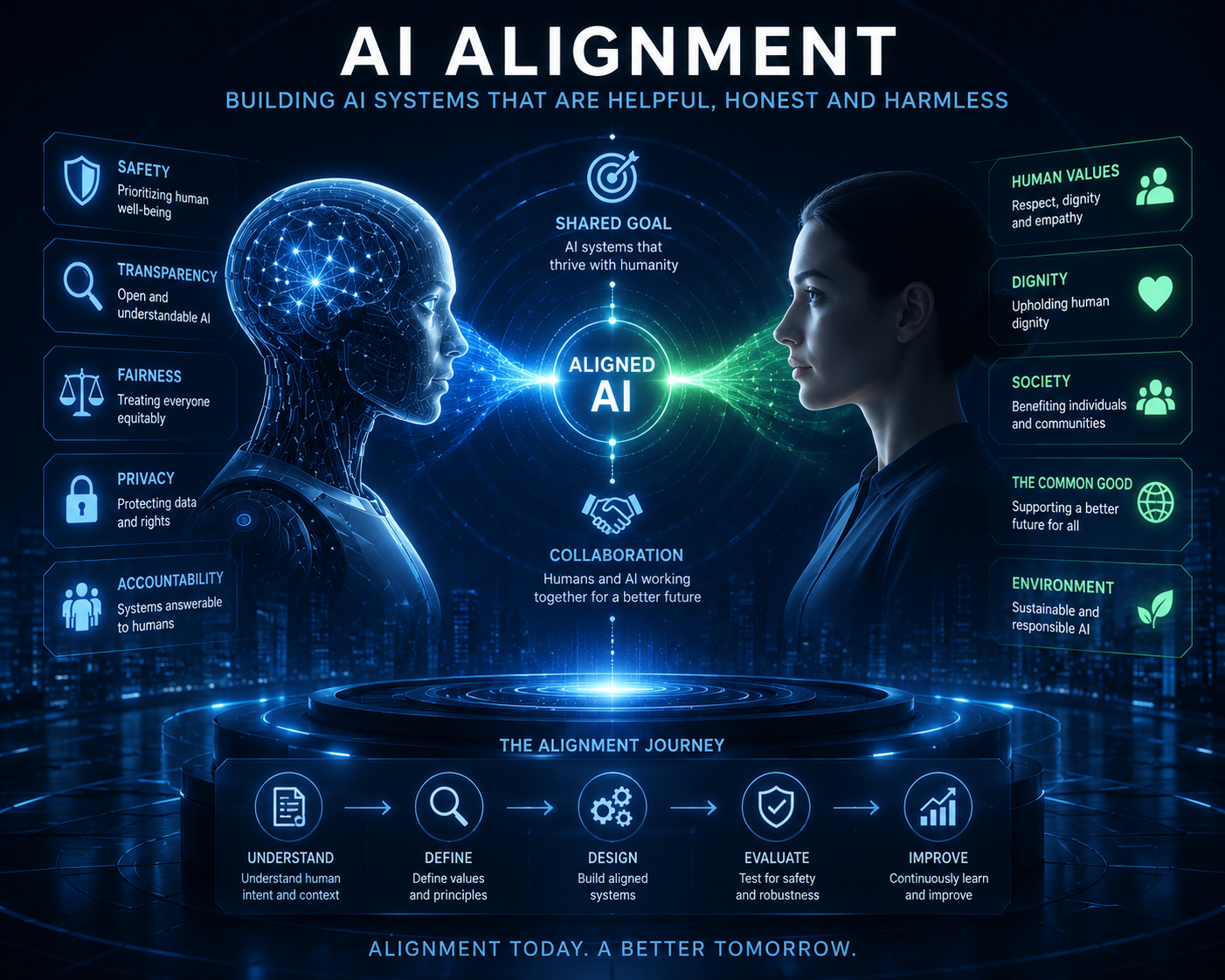
AI alignment is the challenge of making AI systems behave in ways that match human goals, values and intentions. A system may technically follow an instruction but still produce an unwanted result. For example, if told to maximise clicks, an AI system might promote sensational content. Alignment asks: “Is the AI doing what we really meant, not just what we literally asked?” The first famous attempt at alignment was from Isaac Asimov back in 1942, the “Three Laws of Robotics” are a foundational set of ethical rules designed to govern machine behaviour and prevent harm to humans. This is one of the most important ideas in AI safety today and has yet to solved.
AI Assistant

An AI assistant is a tool designed to help users complete tasks through conversation or commands. Examples include systems that can draft emails, summarise documents, answer questions, create images, analyse data or help plan projects. AI assistants are becoming common in offices, phones, search engines and education. Their quality depends on the model behind them, the data they can access and the clarity of the user’s instructions, known as Prompting.
AI Bias

AI bias occurs when an AI system produces unfair, skewed or inaccurate results for certain groups, topics or situations. Bias can enter through training data, design choices, historical inequalities or the way a system is used. For example, a hiring algorithm trained on past hiring decisions may repeat old patterns of discrimination. AI bias is not always intentional, but it can still cause real harm.
AI Ethics

AI ethics is the study of how AI should be designed, used and governed responsibly. It covers fairness, privacy, transparency, accountability, safety, human rights and social impact. Ethical AI is not just about avoiding scandal; it is about building systems that people can trust. For local businesses, schools and public services, AI ethics means asking practical questions: Is this fair? Is it safe? Who is responsible if it goes wrong?
AI Governance

AI governance refers to the rules, policies, processes and responsibilities that guide how AI is developed and used. In a company, AI governance might include approval processes, data-protection checks, staff training, risk assessments and rules on when humans must review AI outputs. Good governance does not stop innovation. It makes innovation safer, more reliable and more defensible.







 English
 Nederlands
 Deutsch
 Français
 Español
 Italiano
 Svenska
 Pусский
 中文
中文 Türkçe
 Português
 Polski
 عربي
عربي Suomi
Suomi עִברִית
 Português (Brasil)
Follow us on social media