

Of course we want to feed the birds that visit our gardens to help wildlife and boost our own mental wellbeing. But with so many feeders on the market, are there any to avoid?
Hayley Willmington, RSPB head of buying and merchandising, offers the following advice.
Features and feeders to avoid
Don’t go for feeders that aren’t easy to take apart or clean, or that require extra tools to do so.
Also, watch out for feeders with sharp perch edges or gaps, which could cause injury to birds.
Avoid suet that comes in netting as birds could get beaks or feet trapped in it.
And avoid flat feeders including bird tables, but also flat trays beneath hanging feeders due to the potential for the spread of disease. There is evidence to suggest that damp food on flat feeding surfaces like bird tables can increase the risks of spreading disease among some garden birds, the RSPB says.
What feeders should you be using?
Hanging feeders are simple to set up, can be hung in various locations and are a great option for smaller gardens or balconies where space is limited, says the RSPB.
When selecting which style to use, or if you’ve been gifted one, key things to look out for are features that promote good standards of cleanliness and hygiene.
Use feeders which are well-constructed and can be easily taken apart for cleaning without the need for any additional tools. The material is also important, as this needs to be something non-porous such as glazed ceramic, plastic or powder coated metal.
Use feeders which keep out damp
The best-designed feeders will have good ventilation, waterproofing and drainage features. It’s also worth inspecting the perch shapes on a feeder, to make sure there’s no sharp edges or gaps which could cause injury and that they generally provide a comfortable perching position for feeding birds.
Be hygiene aware
Don’t let uneaten feed build up in a feeder, to reduce any chance of it becoming wet and contaminated. Only fill yours with as much feed as you would expect to be eaten within 48 hours.
Rotate the position of your feeders regularly, as this can avoid any build-up of debris or droppings underneath. It’s critical that dropped seed is cleared up regularly and disposed of, because the chances of it being contaminated are high.
Place feeders carefully
Make sure your feeders are spread out around the garden to help prevent birds congregating in a small area and that the feeders are placed high enough off the ground to be safe from ground predators and ideally a couple of metres away from some dense cover (like bushes), so that birds have a safe place to retreat to from aerial predators.
Keep them clean
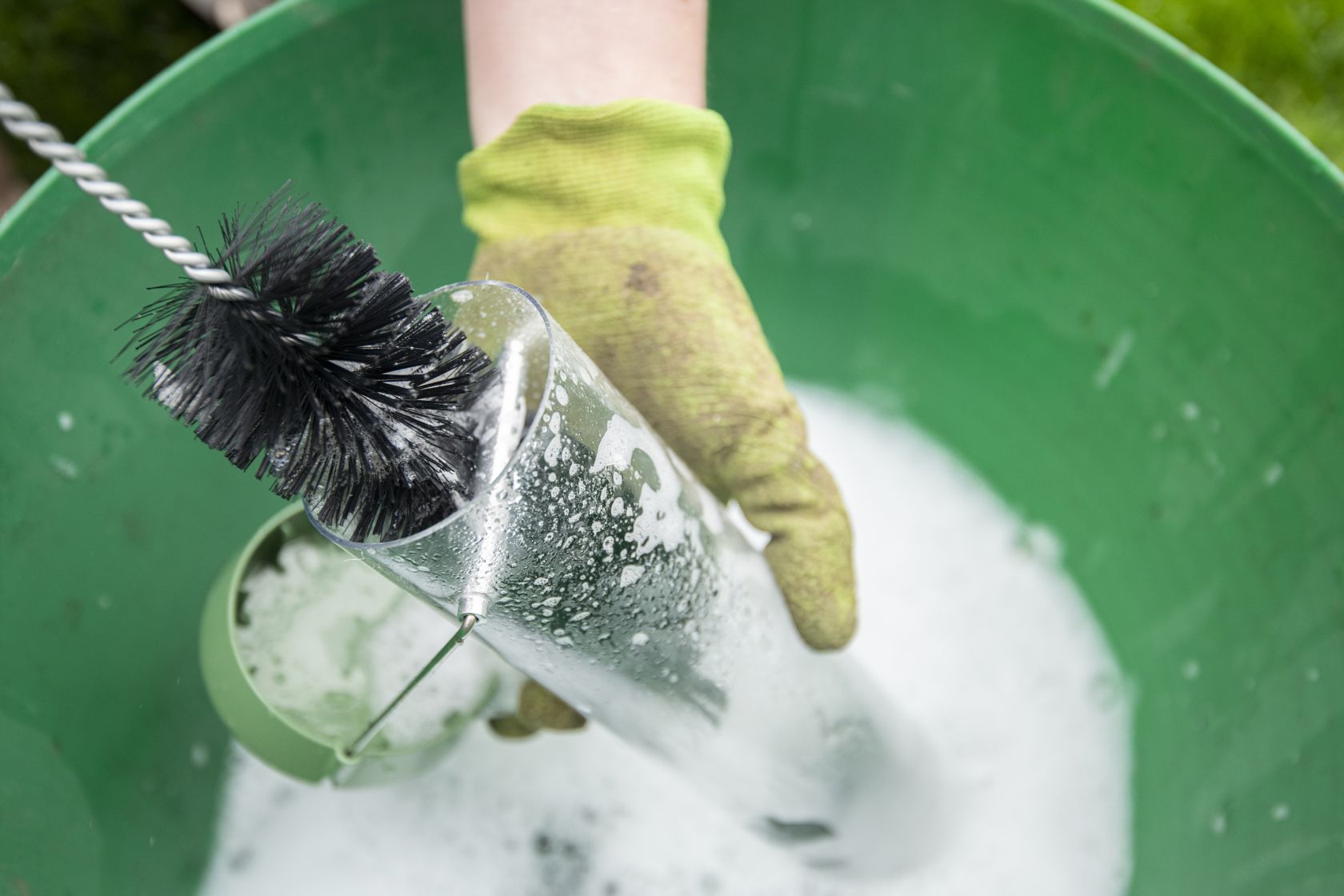
Regular cleaning is essential. All feeders should be cleaned out and scrubbed (with a 5% bleach solution) at least every week – and if you’re also providing water for birds, this needs to be replaced with fresh water on a daily basis.






 English
 Nederlands
 Deutsch
 Français
 Español
 Italiano
 Svenska
 Pусский
 中文
中文 Türkçe
 Português
 Polski
 عربي
عربي Suomi
Suomi עִברִית
 Português (Brasil)