


It is the oldest continuous pre-Lenten celebration in Portugal and attracts thousands of visitors each year.
I saw the carnival for the first time in 2020, just days before the pandemic began. It would be the last big public event I would experience for the next two years. In the years that followed, something always seemed to get in the way, and in 2026, I was finally able to return and join the celebrations once again.
The carnival was held from 15 to 17 February, with parades starting each afternoon at 3 pm. Avenida José da Costa Mealha became the stage for the main procession. I visited on the first day, Sunday the 15th. Arriving just before the celebrations began felt special — the streets filling up, music testing through loudspeakers, performers making final adjustments to their costumes. These are undoubtedly the busiest days of the year in the town of Loulé.
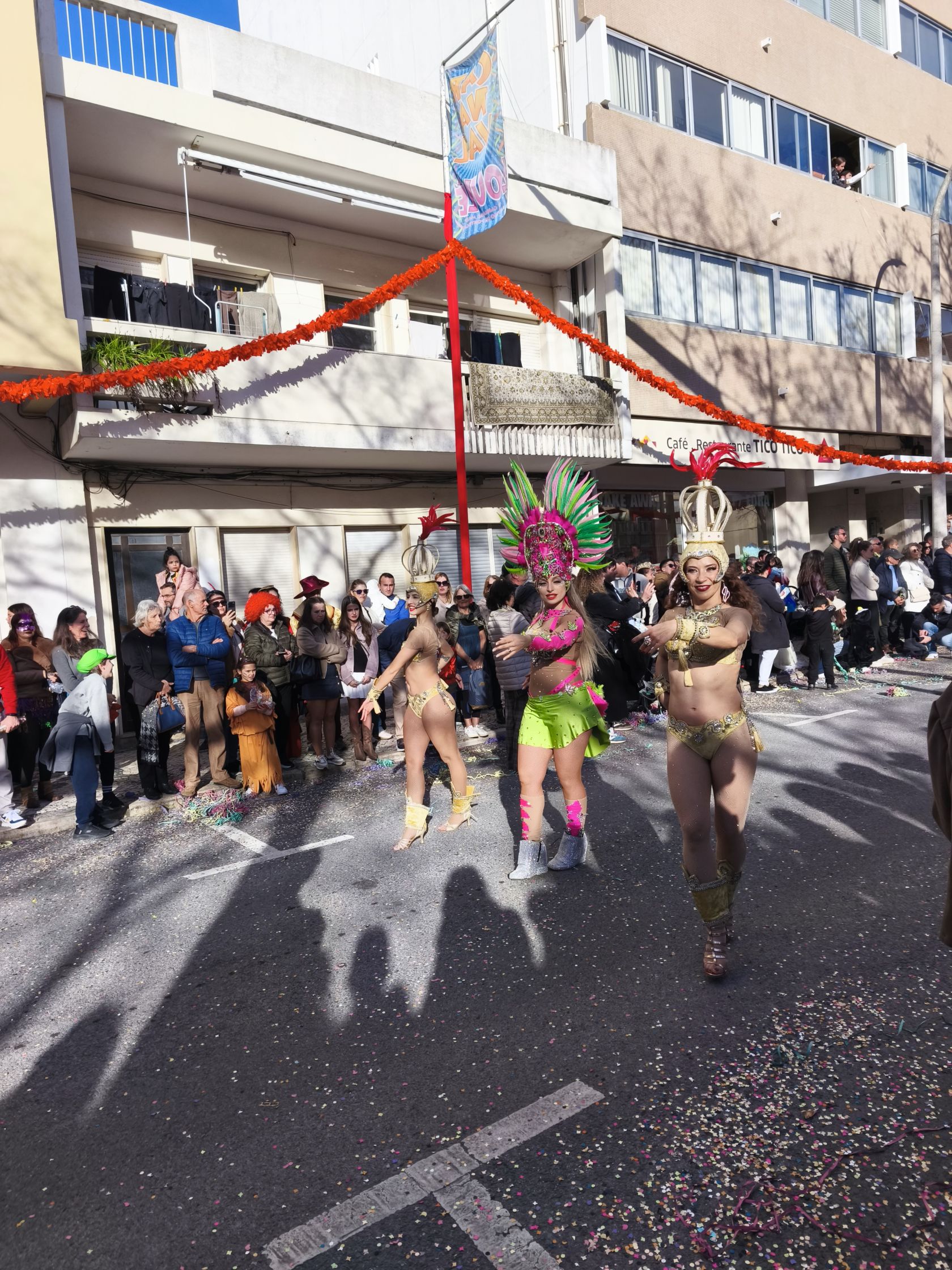
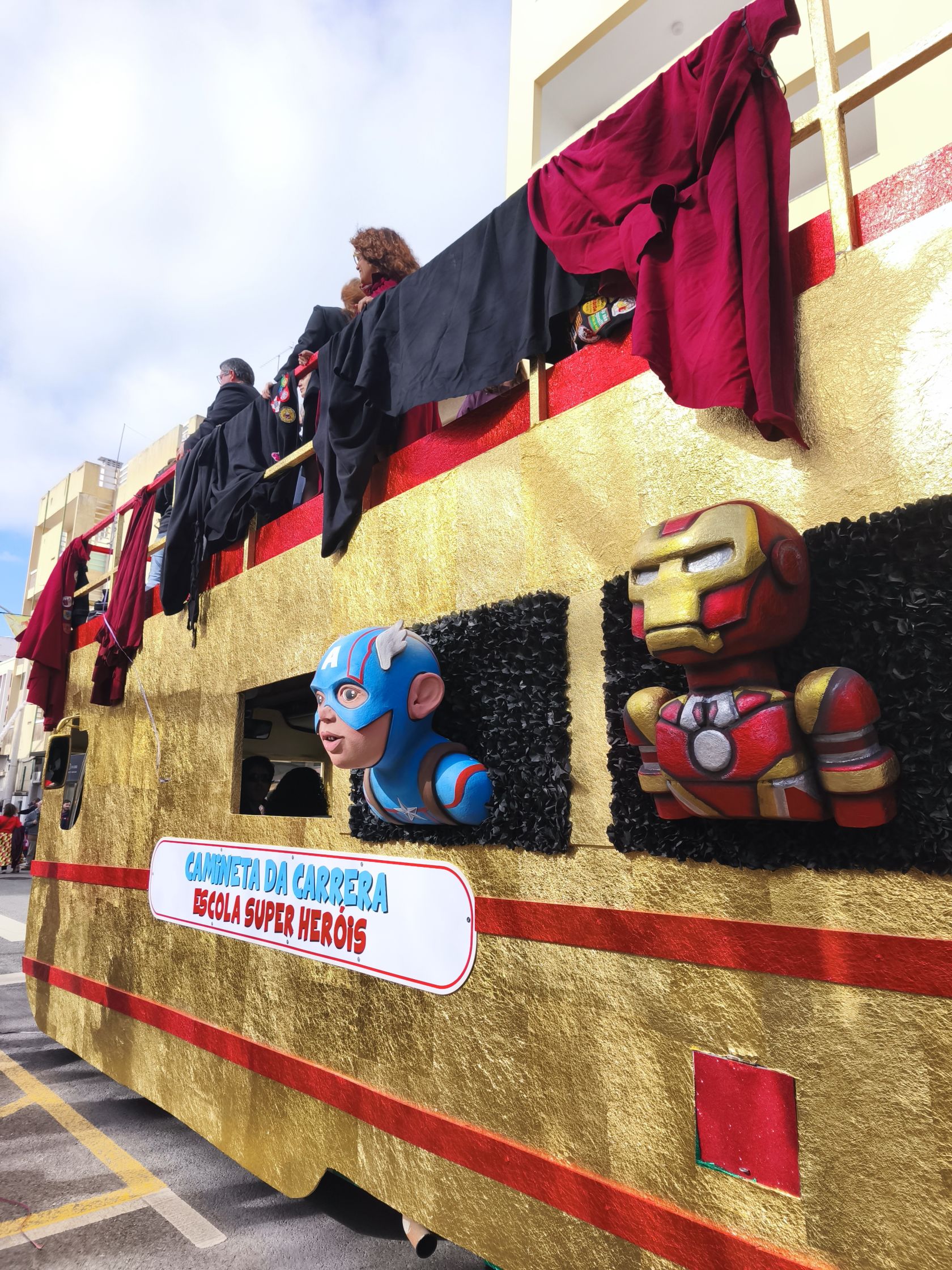
Fourteen floats rolled along the avenue, accompanied by more than 600 participants — samba groups, Brazilian dancers, giant puppets, jugglers, and animation crews. Catchy songs kept the energy high, and the atmosphere was loud and joyful.
The official celebrations began earlier. On Friday, 13 February at 10 am, children took over the streets for their own parade. For two hours, Loulé belonged to face-painted pirates, tiny superheroes, and princesses, proudly showing off their costumes in a scaled-down version of the main event. One of the most beautiful aspects of the carnival is that all generations take part. During the main parade, you can see everyone — from toddlers to grandparents — enjoying the festivities together.
On Monday night, 16 February at 10 pm, the party moved indoors for the traditional Grand Ball at the Salão de Festas de Loulé. The gala follows a set theme, and guests are expected to wear masks that match it. It remains one of the most anticipated evenings of the Carnival programme.
A Celebration with deep roots
Carnival has been part of Loulé’s identity since at least 1906. In the beginning, it was a much simpler community celebration known as the “Batalha das Flores.” The floats were decorated with natural and handmade flowers, often inspired by the almond blossoms that colour the Algarve countryside at this time of year.
As the years passed, the parade gradually changed. Satire became one of its most important features, influenced partly by Brazilian Carnival traditions. Giant figures — the well-known gigantones and cabeçudos — started appearing on the floats, gently (and sometimes not so gently) making fun of politicians, public figures, and current events. That sense of humour is still at the heart of Loulé’s Carnival today.
Today, the Carnival is not just a tourist attraction; it is something the whole community helps to create. Local associations, schools, and volunteers all play a role in organising the event, and ticket sales often support social causes in the region.
Satire at full volume
At the heart of this year’s parade was Zé Povinho, recast as an unlikely superhero of the people. Dressed in a green-and-red Superman-style suit and “flying” with the help of a firmly closed umbrella — a playful nod to the superstition that opening one brings rain — he battled everyday problems such as the rising cost of living, health service pressures, and the housing crisis.
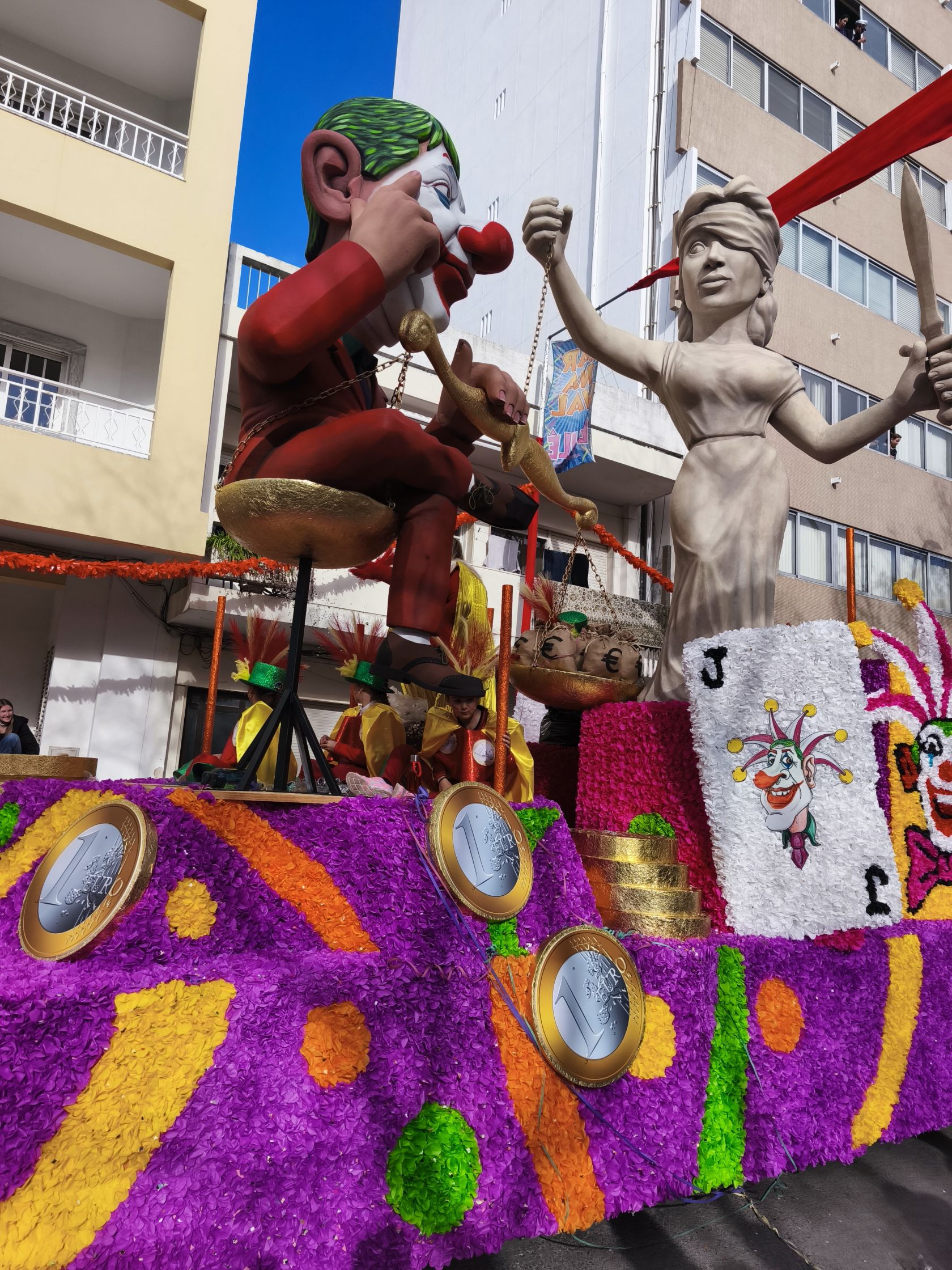
One of the floats featured the Statue of Justice holding her scales, with money on one side. Next to her stood a Joker figure, adding a sense of chaos and irony—a simple, clear message about how money can influence justice.
Politics, as always, provided plenty of material. One float imagined the presidential race as an underwater saga, with Admiral Henrique Gouveia e Melo transformed into Aquaman and Luís Marques Mendes as a wide-eyed Nemo. Former Prime Minister José Sócrates appeared as the Joker, adding a familiar touch of drama.
Sport did not escape either. Cristiano Ronaldo made his regular cameo as “Super-Ronaldo,” this time accompanied by Georgina and her oversized engagement ring. Rivalries within Portuguese football were staged as a comic-book showdown between club presidents reimagined as Hulk-like figures and dragons.
Even international affairs found their place in the parade. One of the most elaborate floats referenced tensions in Venezuela, depicting Nicolás Maduro aboard a boat loaded with contraband, intercepted in Caribbean waters by a Captain America-style Donald Trump. No contemporary satire would be complete without figures such as Volodymyr Zelensky and Vladimir Putin making an appearance.
After more than a century, the Loulé Carnival still does what it has always done best: reflect the world through humour, colour, and exaggeration.







 Portugal Handbook
 English
 Nederlands
 Deutsch
 Français
 Español
 Italiano
 Svenska
 Pусский
 中文
中文 Türkçe
 Português
 Polski
 عربي
عربي Suomi
Suomi עִברִית
 Português (Brasil)
Follow us on social media