


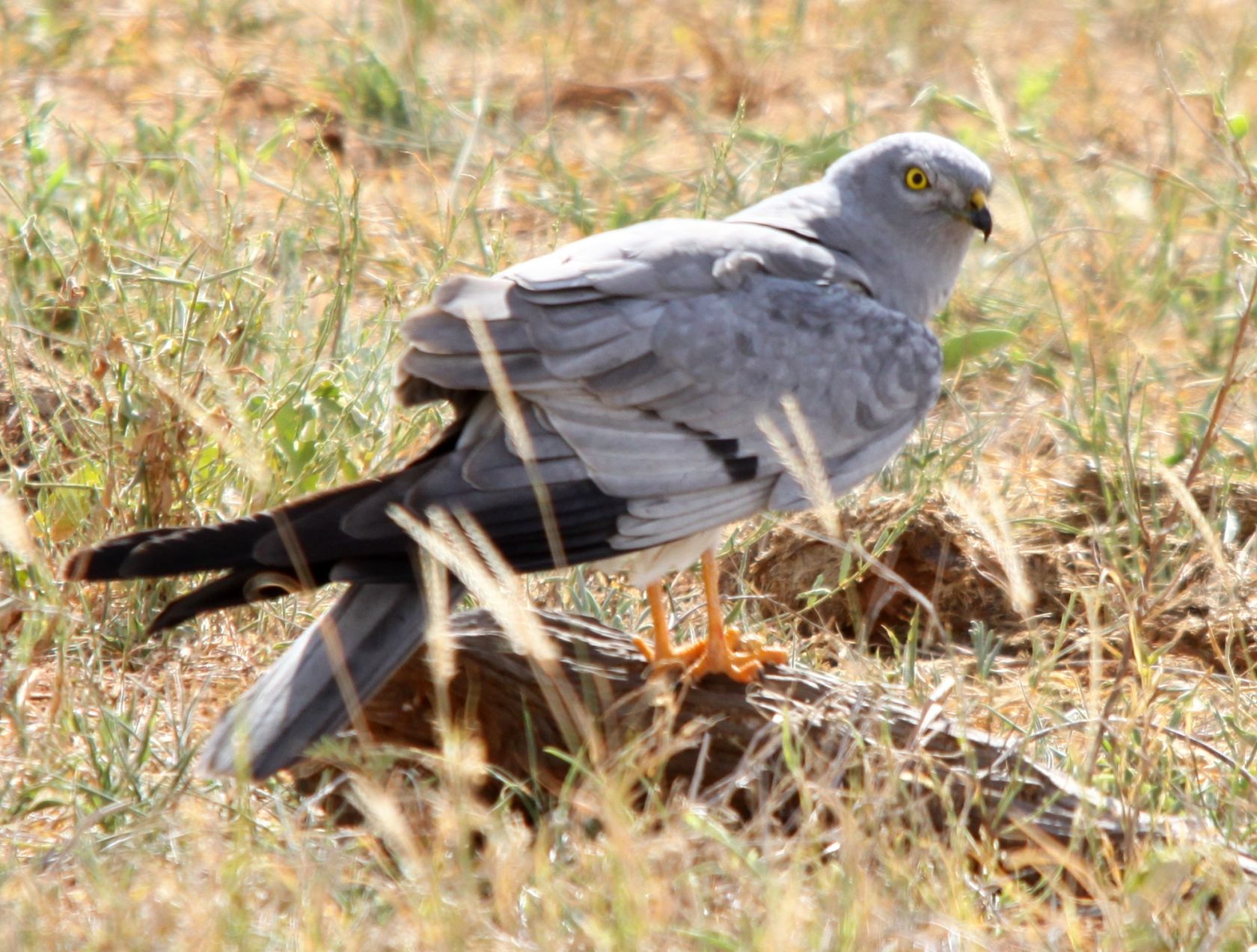
"Thanks to the conservation measures of this campaign, which include monitoring individuals, raising awareness and involving farmers and local communities, as well as protecting nests, rescuing and saving eggs and chicks, this species recorded a significant increase in reproductive capacity in the project's intervention areas in the Iberian Peninsula, estimated at 103%," said the environmental association Palombar in a statement.
According to this environmental association based in Vimioso, in the Bragança district, the coordinating entity of the “Life SOS Pygargos” project, the measures are being implemented in the national territory and in the autonomous communities of Extremadura, Galicia, Madrid, and Castile and León, in Spain.
“According to estimates made by the project's technicians and researchers, without these conservation measures, only 38% of nesting pairs that lay eggs would have managed to raise at least one fledgling. With the measures implemented in the field, it was possible to help many other pairs achieve reproductive success, increasing to 77%, more than double, the number of nesting pairs that managed to produce offspring,” indicated Palombar.
The association also explained that, during this year's “Save the Montagu's Harrier” campaign, 618 nests of this species were monitored in the project's intervention areas in Portugal and Spain, in agricultural lands and scrubland in mountainous areas, habitats where it nests.
According to biologists and other entities involved in this cross-border project, “the Montagu's Harrier, which has a threat status of ‘Endangered’ in Portugal and ‘Vulnerable’ in Spain, nests on the ground, especially in agricultural lands with forage and cereal crops.”
Positive
“The increase recorded this year in the harrier's reproductive success is quite positive, considering that, according to data from the first census of the species carried out in Portugal in 2022-2023, this bird was on the verge of extinction, and in Spain, the situation is also quite critical,” emphasizes biologist Joaquim Teodósio, from the non-governmental organization Palombar, who is quoted in the statement.
This year, 72 harriers were also tagged with GPS/GSM devices, a fundamental measure to detect threats affecting this species, as well as to improve conservation measures on the ground.
“The transmitters allow for real-time monitoring of the tagged birds and provide valuable information related to behavior, migratory movements, nesting and feeding areas, risk factors, among others,” indicated Joaquim Teodósio.
The “Life SOS Pygargus” project, presented in Miranda do Douro on November 22, 2024, has a budget of 11 million euros aimed at saving the Montagu's Harrier from extinction through various agricultural and environmental actions.
This project is coordinated by the non-governmental organization (NGO) Palombar and has 17 partners, of which 13 are Portuguese entities and four are Spanish, including universities, companies, NGOs, environmental associations, the Institute for Nature Conservation and Forests (ICNF), and the Northern Regional Coordination Commission (CCDR-N).
The harrier includes three species of birds of prey known in Portugal as the Montagu's harrier, the hen harrier, and the red-rumped harrier, which feed on small rodents and insects and are fundamental for the control of agricultural pests.
The “Life SOS Pygargus” project began in September 2024 in Portugal and Spain and will run until 2030.






 English
 Nederlands
 Deutsch
 Français
 Español
 Italiano
 Svenska
 Pусский
 中文
中文 Türkçe
 Português
 Polski
 عربي
عربي Suomi
Suomi עִברִית
 Português (Brasil)
Follow us on social media