

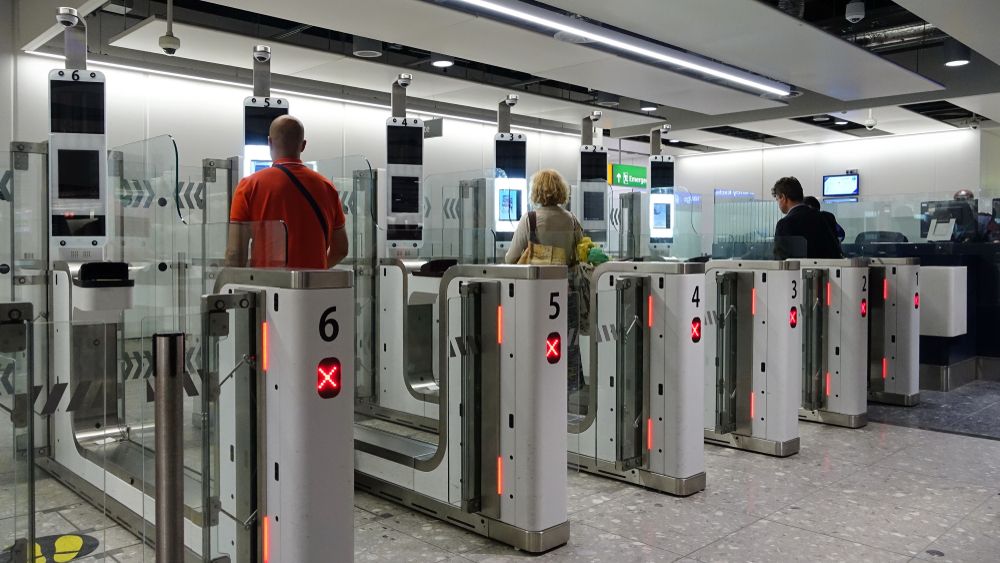
In a response sent to Lusa, the SSI indicates that there is a possibility of suspending the Entry/Exit System (EES) during the Christmas season, a decision that “will be taken according to the information received from Portuguese airports”.
The SSI states that this measure was recently authorised at the European level by the European Commission due to “the constraints that have been observed in some European airports, given the need for more procedures in the EES registration, which will further increase waiting times”.
However, the Internal Security System assures that the decision to suspend or not the application of the EES will be taken “on a case-by-case basis and, if necessary, based on an assessment of the situation at each airport and without compromising border security.”
“If there is no need to suspend the EES, it means that there are no excessive waiting times to cross the border,” the agency clarifies.
The new European border control system for non-EU citizens came into operation on October 12th in Portugal and other Schengen Area countries.
The entry and exit of travellers from third countries are now registered electronically, indicating the date, time, and border post, replacing the traditional passport stamps.
Waiting times
The implementation of this entry and exit system has worsened waiting times, especially at Lisbon airport, with passengers sometimes having to wait for several hours, which recently led the Government to create an emergency ‘task force’ to manage this crisis situation.
The situation could become even more complicated with the implementation of the second phase of the EES, with the collection of biometric data, which consists of obtaining photographs and fingerprints of passengers.
According to the SSI (Internal Security System), the date of December 10, 2025, was determined by the European Commission, and between that day and January 10, 2026, biometric data will have to be collected from 10% of passengers crossing the Portuguese border.
The EES also requires the collection of a travel questionnaire from each passenger. Outside the Schengen Area, the mobile application ‘Travel to Europe’ is planned, where pre-registration can be downloaded 36 hours before the trip so that the data can be centrally stored and used for border control.
The Internal Security System adds that in Portugal, the ‘Questionnaire’ functionality will be available in the first phase.
In an assessment of the approximately two months of operation of the EES (European Electronic System), the SSI (Portuguese System for Information and Communication) states that there were no technical constraints at the start of operations and, since October 12th, “some adjustments have been made to the PASSE+ system to make it more suitable and compatible with the EES” and the computer system “has behaved as expected and in accordance with the rules established at the European level”.
System outages
The SSI also says that there were some system outages and some isolated problems on the national side, which were resolved by the technical teams.
“Globally, the EES system itself is stable, reliable and robust and has demonstrated that it meets the technical requirements for which it was developed,” it points out, noting that, since October 12th, almost one million passengers have been registered in the EES, making Portugal the European Union country with the most registrations in this new system.






 English
 Nederlands
 Deutsch
 Français
 Español
 Italiano
 Svenska
 Pусский
 中文
中文 Türkçe
 Português
 Polski
 عربي
عربي Suomi
Suomi עִברִית
 Português (Brasil)
Great time for the criminals and illegal people to come in free reign and settle in Portugal with free accommodation/health service, etc, etc..
By Claudio from Other on 11 Dec 2025, 06:23