


For Portuguese culture the 20th century was one of extreme turbulence. Two constitutional revolutions, two calamitous world wars, the loss of Empire and vast alterations to the internal economy caused by intense global pressure in the fields of industry, commerce and agriculture combined to produce new philosophies concerning how people lived and thought.
The inexorable force of this history brought irreversible changes to the foundations of Literature and The Arts in general but to the poetic canon in particular. The complex relationship between the Portuguese language, consciousness, reality and imagination encouraged a societal ambivalence which could best be expressed in poetry.
This could well be seen in the first twenty-five years of the 20th century. The collapse of the monarchy in favour of an unstable republic which, with reluctance, participated in the horrors of the first world war caused many writers to reinvent their identities to cope with such national crises. The move towards Modernism ended with the golpe of 1926 and the rise of dictatorship which brought censorship and the imposition of thought control from which the abstraction of poetry provided a refuge.
Under the leadership of Salazar, the Estado Novo (1933 to 1974) extended this totalitarian grip on creativity so that dissidents were excluded from public office, prohibited from publishing work which ran contrary to national mores and restricted in travel and communal association. Punishments included prison sentences. However, socialist resistance persisted especially in literature and the underground press. Poetry, with its ambiguities and movement from modernism to surrealism and existentialism, provided a gambit for freedom of expression as being resilient to totalitarianism.
Such resilience culminated in the peaceful Carnation Revolution of April 1974. During the ensuing quarter century, poets and writers who had been born during the fifty years of repression gradually accustomed to their new freedom and, collectively, began to produce work in a neo-realism style which differed vastly from that of their predecessors.
I give below in chronological order my choice of poets. It is not inclusive. Both poetry and prose of the Salazar era continue to be discovered in caches of old manuscripts which were written anonymously or with pseudonyms.
Alberto Caeiro Born in Lisbon 1889 but spent most of his short life of 26 years in the countryside of Ribatejo. Although not a scholar, he produced a modest amount of verse which was considered masterful by his contemporaries. His most well-known poem was “The Keeper of Sheep”.
Ricardo Reis Born in Oporto in 1887 received a Jesuit education and later qualified as a doctor of medicine. After 1919 he travelled to Brasil, Peru and the USA. However, until his death in 1935 he continued to publish essays and poems the most famous of which is “Odes”.
Álvaro de Campos Born in Tavira in 1890. A naval engineer who used his spare time “On long voyages, in the summer at high sea On the nocturnally looming ship – steadily shaken by the fluttering propeller - Our civilization has no part in this memory”.
Fernando Pessoa Born in Lisbon in 1888 but spent the next 17 years in South Africa. Bi-lingual in English and Portuguese, he studied at the School of Arts and Letters in Lisbon before becoming a freelance translator and co-editor of literary journals such as Athena and Orpheu. In 1914 he had the genius to invent the three characters mentioned above giving them detailed biographies to enable their publication of poetry and prose as contemporaries. This stratagem led to published debate between the four whereby they both praised and criticised each other and their peers. In his poem This he says “They say I lie or feign in all I write. Not true. It is simply that I feel, by way of imagination, the heart I never use”.
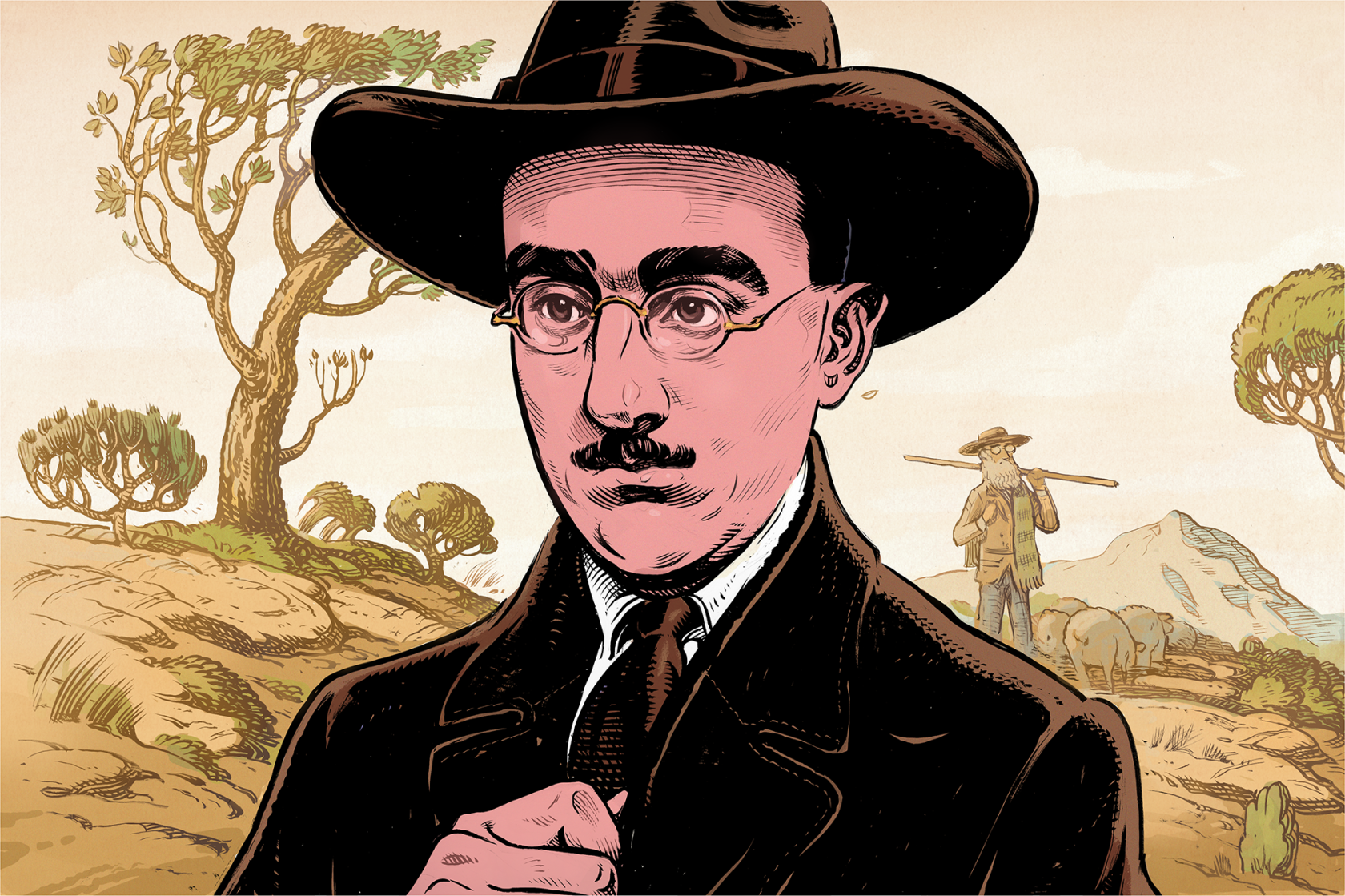
The volume of Pessoa´s work was considerable. Using these three “heteronyms” and several minor characters he encompassed a large range of subjects and expressed opinions which sometimes conflicted. As such, he is considered to be the greatest of 20th century Portuguese poets and his influence was felt throughout the epoch.
Florbela Espanca. Born in Vila Viçosa in 1894 she studied law at Lisbon University where she was one of only six female students out of a total of 460. An ardent feminist, she spent her span of only 36 years as a translator and writer of novels and poetry which reflected a turbulent life with three husbands and subject to manic depression. Her love sonnets and poems of passion were scorned at the time by misogynistic readers but Pessoa spoke of her as his “twin soul”. From Exaltation: “Life´s honey and life´s bitterness Dwell in the lake of my eyes And in my ecstatic, pagan kisses”
Sophia de Mello Breyner Andresen. Born in Oporto in 1919, She is the first of our poets to live for the whole of the remaining 20th century until death in 2004. Thus, her poetry provides a useful comparison of the changes in style over eighty years. She combined her writing with family life (five children) and during the sixties became politically active as a progressive Catholic to oppose the regime. She used the content of Classics for poems such as The Minotaur and Torso to provide modern parallels – “We will rise again where words Are the name of things Where outlines are clear and vivid There in the sharp light of Crete”.
Carlos de Oliveira Born in Brasil in 1921, he spent most of his 60 years in Lisbon. His graduation thesis (from Coimbra University) concerned neo-realist aesthetics- a subject which dominated his artistic creativity. This challenged totalitarianism by drawing attention to the social and economic injustices of the regime.
Herberto Hélder. Born in Madeira in 1930, he is considered to be the most important Portuguese poet after 1950. In 1952, he dropped out from studying the humanities at Coimbra university and joined a circle of poets and artists in Lisbon which included Mário Cesariny, Alexandre O´Neill, Hélder Macedo Vieira and Joâo Vieira. Together they founded the movement for Portuguese Surrealism which although fractured into opposing groups was to influence poetry and the visual arts for around fifty years. After publishing his first book “O amor em Visita” in 1958, Hélder led a nomadic existence for several years in France and the Low Countries existing, like George Orwell, on pittances from menial work. The vision gained from his travels enabled the writing of much experimental poetry using a variety of enigmatic styles which gained favour among dissidents. After 1974 his popularity increased but proportionately his self-esteem diminished. In 1994 he refused to accept the Pessoa prize and thereafter became reclusive until his death in 2015. “The lover transforms. He cuts through forms to the core.And the thing loved is an enclosed bay, The space of a candlestick, The backbone and spirit of women sitting”.
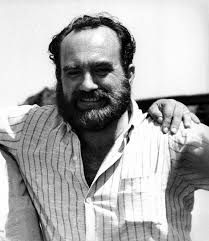
Ruy Belo. Born 1933 in S. Joâo da Ribeira he earned a PhD at the Gregorian University in Rome. Because of his strong opposition to the Salazar regime he was exiled to Madrid from 1971-77 where he became a lecturer in Portuguese history and language. He commenced writing existentialist poetry which was considered to be the best in Portugal before his early death in 1978. Typical poems are “Pilgrim and guest on planet earth” and “Hand to the plough” which end with the words “But manage, poet, your sadness wisely”.
Vasco Graça Moura. Born 1942 in Oporto, he began his career as a lawyer and then moved to publishing before becoming the director of several cultural entities.
He wrote essays concerning the life of Camôes, novels and many poems in neo -realist style. For example, in Fanny he tells the story of how a groper in a cinema was stabbed with a pair of scissors and “fled screaming with his punctured hand. Fanny was always a model of efficiency”.
After 1974 a new generation of poets emerged which, spirited by revolution, largely ignored the examples which I have just given and experimented with new forms and styles which had been unacceptable in totalitarian times. Poetry was adapted to jazz and pop music and also used by rappers or written on walls. Feminism and gay liberation were boosted often using a radical intimacy with an intention to shock.
With the introduction of the internet and the growth of social media, it is often said that society now accepts degenerate forms of literacy and that poetry has become perverse with a lack of objectivity. In 21st century Portugal, there are no apparent contenders for the fame earned by Pessoa, Helder and their contemporaries.
by Roberto Cavaleiro - Tomar 16 November 2025






 English
 Nederlands
 Deutsch
 Français
 Español
 Italiano
 Svenska
 Pусский
 中文
中文 Türkçe
 Português
 Polski
 عربي
عربي Suomi
Suomi עִברִית
 Português (Brasil)